Vacuum Chamber vs Sniffer Methods: Choosing the Right Leak Detection Equipment for Industrial Applications

Liuan, Anhui Feb 4, 2026 (Issuewire.com) - Comparative Analysis: Vacuum Chamber vs. Sniffer Methods
The pursuit of airtight integrity is a cornerstone of modern manufacturing, particularly within sectors where even the most minute leak can lead to catastrophic system failure or significant environmental hazards. For manufacturers seeking High Quality Vacuum Chamber Leak Detection for the Refrigeration Industry, the stakes are exceptionally high. Refrigeration systems, ranging from domestic air conditioners to industrial-scale cold storage, rely on the absolute containment of refrigerants to ensure thermal efficiency and regulatory compliance. Vacuum chamber leak detection has emerged as the gold standard in this field, utilizing helium mass spectrometry to identify leaks that are invisible to the naked eye. By placing a component inside a sealed, evacuated chamber and monitoring for tracer gas migration, this method provides a holistic, high-sensitivity assessment that ensures every joint, weld, and seal meets rigorous industrial standards.
Selecting the appropriate leak detection strategy requires a balanced understanding of the two primary helium-based approaches: the Vacuum Chamber (Inside-Out) method and the Sniffer (Outside-In) method. Both utilize helium for its small molecular size and inert properties, yet they serve distinct operational needs.
1. Sensitivity and Detection Limits
The most significant differentiator lies in the detectable leak rate. Vacuum chamber systems operate in a controlled environment where background noise is minimized. This allows for the detection of extremely small leaks, often reaching levels of 10¹ mbar·l/s. In contrast, the sniffer method is subject to atmospheric interference. Because the probe must "suck in" air from the environment to find helium, it is typically limited to detecting leaks around 10 or 10 mbar·l/s. For high-end refrigeration components, the precision of the vacuum chamber is often non-negotiable.
2. Global vs. Localized Inspection
The vacuum chamber method provides a "global" test. Once the component is inside the chamber, the entire exterior surface is tested simultaneously. If a leak exists anywhere on the unit, the system will trigger an alarm. The sniffer method, however, is a "localized" test. An operator or a robotic arm must move a probe along every potential leak point. This introduces the risk of human error; if a specific joint is missed by the probe, a leak may go undetected despite the equipment's functionality.
3. Throughput and Automation Potential
More On Toptelecast ::
- Top 5 Reasons to Partner with a China Leading Rechargeable Heated Clothing OEM Service This Year
- Sue Edwards, RN: Elevating Healthcare Quality and Compliance in Tyler, TX
- Radiation Puppy Expands Their Musical Horizons with "Shy"
- Webnonline Recognized as a Top Result-Driven SEO Agency in Chicago
- Omar Messado sets a 90-day standard for evaluating procurement talent
In high-volume industrial applications, speed is a critical metric. Vacuum chamber leak detection systems are easily integrated into automated production lines. A cycle can be completed in seconds, providing a definitive pass/fail result without manual intervention. Sniffer methods are inherently slower and more labor-intensive. While sniffing is excellent for pinpointing the exact location of a leak after a global test has failed, it is rarely the most efficient choice for primary high-speed production.
4. Environmental Influence and Reliability
Sniffer methods are highly susceptible to "helium background" issues. If a previous test resulted in a large leak, the surrounding air may become contaminated with helium, leading to false positives or the inability to zero the equipment. Vacuum chamber systems bypass this issue by utilizing a dedicated recovery and evacuation cycle, ensuring that each test begins with a clean slate. This leads to higher repeatability and reliability, which are essential for maintaining ISO-certified quality control processes.
Technical Innovation in Helium Mass Spectrometry
Anhui Gadro Industrial Technology Co., Ltd. has positioned itself at the forefront of this technological evolution by developing the Gadro Helium Mass Spectrometry Leak Detection System. This system represents a shift from standalone hardware to an integrated technical ecosystem. At its core, the technology utilizes advanced ion source designs and high-stability sensing to ensure that even under continuous industrial workloads, the accuracy of the leak detection remains uncompromised.
The innovation extends beyond the vacuum physics. Gadros systems incorporate intelligent gas recovery modules that can reclaim up to 98% of the helium used during the testing process. This significantly reduces the operational cost for manufacturers, addressing one of the primary concerns regarding helium's market price volatility. Furthermore, the integration of digital smart factory capabilities allows these systems to feed real-time data into industrial Internet platforms. Manufacturers can track leak patterns, analyze production defects via big data, and implement predictive maintenance, transforming leak detection from a simple quality check into a source of actionable manufacturing intelligence.
The Critical Industrial Role in the Refrigeration Industry
In the context of modern industrial manufacturing, the refrigeration sector faces some of the most stringent leak tightness requirements globally. This is driven not only by performance efficiency but also by environmental regulations surrounding refrigerant leakage. Gadros vacuum chamber systems act as the ultimate quality gatekeeper for core components like evaporators, condensers, and compressors.
Ensuring Thermal Efficiency and Lifecycle
The efficiency of a refrigeration cycle is entirely dependent on the precise volume of refrigerant within the system. Even a "micro-leak" can lead to a gradual loss of pressure, forcing the compressor to work harder and consume more energy. Gadros high-sensitivity systems ensure that refrigeration unitswhether for residential or commercial usemaintain their rated energy efficiency over their entire expected lifespan. By detecting leaks that would otherwise go unnoticed, manufacturers prevent performance degradation that leads to increased energy consumption and premature system failure.
Total Containment for Environmental Compliance
With the global transition toward new refrigerants such as R32, R290, and CO2, refrigeration manufacturers are under extreme pressure to prevent gas escape. Many of these gases are flammable or have high Global Warming Potential (GWP). The vacuum chamber method provides a "Global Test," ensuring that every inch of the pressurized system is verified. This guarantees that no matter where a defect existsbe it a microscopic crack in a copper tube or a faulty braze jointit is captured before the product leaves the factory, ensuring full compliance with international environmental standards like the Kigali Amendment.
High-Speed Automated Production and Cost Control
In a typical high-output refrigeration production line, speed is as vital as accuracy. Gadros systems are designed for maximum throughput; large-scale components can be loaded, evacuated, tested, and recovered in a cycle lasting less than 60 seconds. This level of automation eliminates the bottleneck often caused by manual inspection. Furthermore, Gadros technical innovation includes integrated recovery systems that reclaim the helium used inside the units. This industrial-scale recycling reduces gas consumption by up to 98%, making high-precision vacuum testing more cost-effective than lower-tech alternatives over the long term.
Corporate Excellence and Strategic Applications
The core strength of Gadro lies in its ability to offer holistic solutions rather than just individual machines. As a leading manufacturer in China with decades of expertis, the company bridges the gap between high-precision inspection and full-scale automation. This "premium product" philosophy ensures that the equipment is not only accurate but also resilient enough for the rigors of 24/7 industrial environments.
Gadros commitment to responsive servicefrom pre-sales consultation to after-sales technical supportenables partners to transition toward smart factory models with confidence. By providing customized services that range from single-unit inspection to the planning of entire automated production lines, the company helps clients achieve higher yields and lower failure rates.
Looking forward, the leak detection industry is moving toward greater integration of AI and automation. As global regulations on environmental protection and energy efficiency become stricter, the demand for zero-leakage systems will continue to rise. Companies that invest in advanced vacuum chamber technology and digital integration will be best positioned to meet these future challenges. Gadro remains dedicated to driving this progress, ensuring that high-end manufacturing sectors have the tools necessary to maintain the highest levels of safety and efficiency.
For more information on advanced leak detection solutions, visit: https://www.gadrodetection.com/
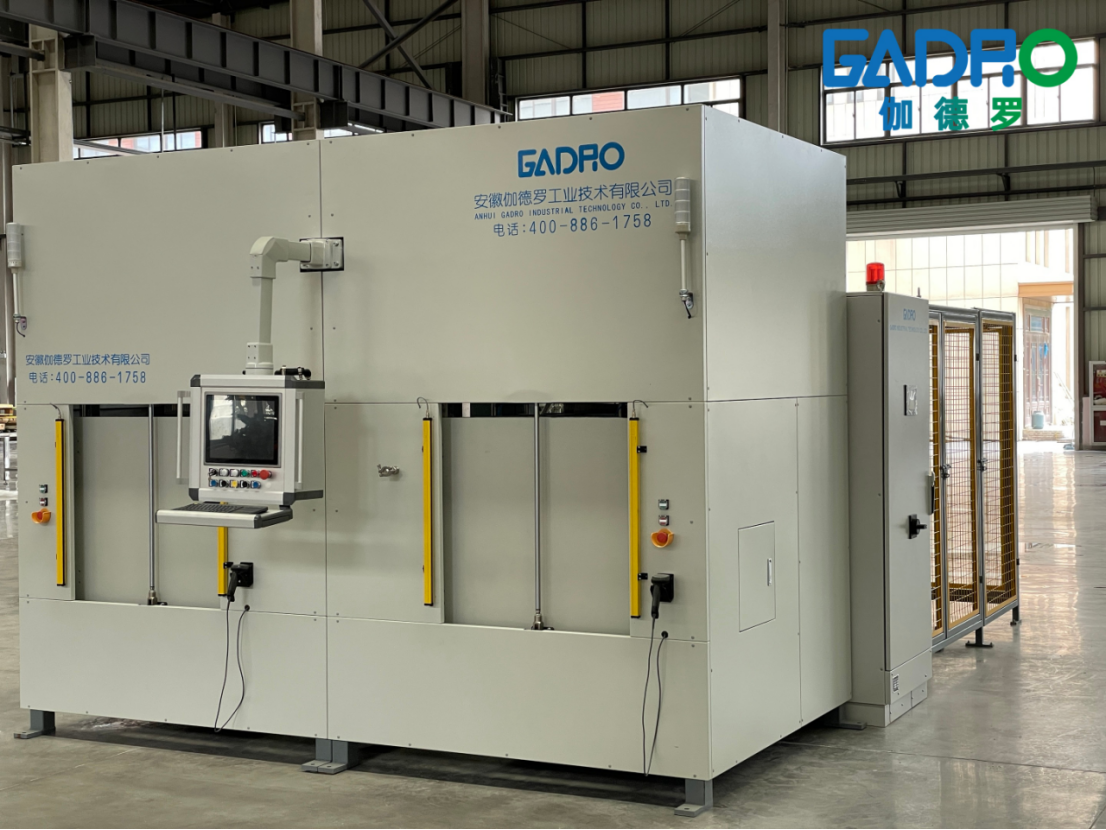
Source :Anhui Gadro Industrial Technology Co., Ltd.
This article was originally published by IssueWire. Read the original article here.